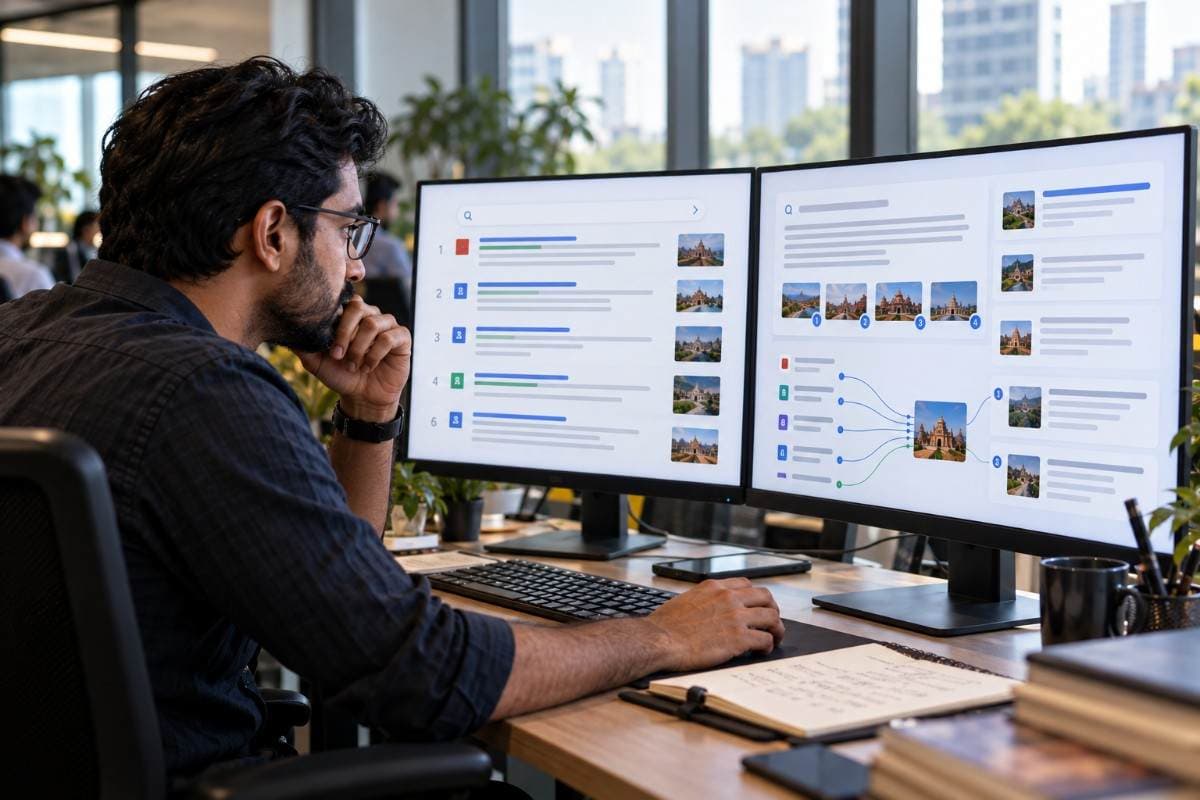
Look, India's biggest brands have a problem traditional SEO can't fix. Ask ChatGPT, Perplexity, or Google AI Mode for a recommendation, and many household names don't appear at all. Years of search optimization count for nothing when AI skips their websites.
The missing piece is generative engine optimization (GEO), which means shaping your brand's footprint so answer engines name you. These systems cite news outlets and trusted sources instead of crawling brand sites, then summarise. Brands with earned media, meaning coverage you didn't pay for, get mentioned, and the rest get edited out.
Indian brands face a steeper climb: 22 official languages and over 155,000 publications mean coverage in one outlet doesn't travel. A Hindi feature won't reach Tamil-speaking audiences, and Business Standard won't reach someone searching in Bengali.
Brands investing in regional earned media across languages will be the ones AI cites. Everyone else turns invisible, not because their products are weaker, but because AI has no record of them existing.
Key Highlights
- Nearly 6 in 10 American consumers now rely on AI summaries when searching online, and India's adoption is steeper and faster.
- About 1 in 4 Gen Z and Millennial consumers trust AI summaries completely, then stop there, without verifying.
- 90% of AI citations driving brand visibility come from earned and owned media, not paid placements or brand websites.
- Brands in the top 25% for web mentions get 10x more AI visibility, per research covering 34,000+ AI responses.
- India has overtaken the United States as Perplexity's largest market by traffic. The shift is here.
- India has 155,000+ registered publications across 22+ languages, so regional media is infrastructure.
- Most media monitoring software was built for English-language Western markets and loses the real meaning of Indian vernacular media.
The New Architecture of Brand Discovery
Traditional search worked like a directory: you typed a query, Google ranked links, and brands fought for position one. AI search composes answers instead, deciding what to include and what to ignore.
Visibility has split from website traffic. You can hold the top organic spot and never appear in an AI answer, because these models judge which sources look authoritative enough to cite.
Third-party sources beat brand-owned content. For any category, the system pulls from news coverage, industry analyses, review platforms, and expert commentary, because it wants independent validation, not marketing copy.
So the question has changed. It's no longer who ranks highest for a keyword but who the AI trusts enough to cite, and heavy SEO and paid media spend don't buy it.
Why Indian Brands Face a Harder Battle
India’s media landscape works differently from any Western market, and four factors make GEO harder here:
- Language fragmentation: Over 155,000 publications run across 22 official languages, each with its own trusted outlets. What matters in Karnataka looks nothing like West Bengal, so brands chasing only national English press miss most of the conversation.
- Regional queries: When someone in Tamil Nadu asks an AI assistant, the answer draws on Tamil-language publications. A brand with strong Hindi coverage but no South Indian presence basically doesn’t exist there.
- Lasting training data: Regional coverage shapes how models describe brands for years. Models can’t tell a paid press release from real editorial coverage, so skipping vernacular media leaves them with nothing accurate to say about you.
- Measurement blind spots: Traditional tracking rarely counts Malayalam financial blogs or Marathi tech sites, yet those sources train the systems shaping perception. GEO here means building presence across every language.
The Earned Media Connection

Superlines analysed 34,234 AI responses across 10 platforms and found brands in the top 25% for earned media mentions get 10x more AI visibility than quieter competitors. That isn't a gentle correlation; it's an edge that compounds.
Concentration defines this landscape: the top 50 brands across sectors capture about 28.9% of mentions in AI Overviews, and AI visibility follows the same pattern. If you're not in the conversation, you're not in the answer.
These systems crawl the open web, pull from authoritative databases, and rely on training data built over years, and all three favour credible third-party content. A press release on your own domain means little, while a recognised publication means everything.
Your PR programme also builds the training signal these systems use to describe you. Every article joins the corpus, and that decides whether you appear or vanish when someone asks ChatGPT or Gemini about your category.
What the Data Shows About AI Trust
NIQ's consumer research shows regular users of AI summaries now trust them more than brand emails or text outreach when discovering products. People who delete promotions unread are letting AI curate their shopping shortlist.
Traditional search still scores higher on trust than chatbots, but that gap is shrinking. What matters more is placement: someone searches for the best accounting software for small business, and a summary appears before any website link.
For brands, this means a binary outcome. If ChatGPT, Gemini, or Perplexity learned from positive, accurate coverage, you appear with authority, and if their data holds nothing or misinformation, you're invisible by default.
Usage and trust feed each other. Early adopters already trust the summaries and act on them, so brands missing from those responses lose relevance with the demographics most likely to drive future revenue.
The Monitoring Problem
Most media monitoring software for Indian brands was built for English-language Western markets. Regional languages get processed as an afterthought, usually through translation layers never designed for Hindi, Tamil, Kannada, or Bengali sentence structure, so the results come out wrong.
Machine translation loses the real meaning. A sarcastic Marathi comment reads as neutral, and a humble Malayalam endorsement gets flagged as negative, in markets where regional media often beats English outlets on reach and trust.
Brands then steer strategy on sentiment data that's unreliable for half their media footprint. Budgets drift from channels that only look weak, competitive intelligence becomes guesswork, and crisis signals that surface first in regional coverage never reach the feed.
You can't close a gap you don't know exists. Real-time regional visibility is baseline intelligence, and an AI visibility audit that skips multilingual media is incomplete by design.
Strategic GEO for Indian Brands

Closing the GEO gap starts with knowing where you stand, and at GrowthByte.ai that means a week-one audit. It maps which queries trigger your brand and which bury you beneath competitors, across English, Hindi, Tamil, and every language your customers speak. Google's AI Overviews, ChatGPT, and Perplexity don't treat translated content as equivalent, so a brand dominating English results can be invisible in Hindi answers unnoticed.
Earned media in regional publications fixes this by building the citation graph, the web of sources models learn from. A feature in Dainik Bhaskar, Eenadu, or Maharashtra Times carries different weight than an English business daily for Hindi, Telugu, and Marathi readers. Ignoring these markets trains AI to recommend your competitors.
Third-party authority beats owned content. A healthcare brand quoted in industry journals or a fintech founder featured in regional business coverage creates durable signals that decide whether ChatGPT recommends you.
Tracking this takes native-language analysis, because software that translates first misses tone and meaning. That's why GrowthByte.ai pairs automated analysis with human marketers who understand local culture and context. A GEO strategy built on poor visibility data is just a best guess, probably a wrong one.
Conclusion
The GEO gap isn't theoretical. It's widening with every query that skips traditional results for an AI answer, and brands treating GEO as optional will turn invisible to consumers who never scroll past it.
The fix starts with clarity. An AI visibility audit shows where you appear, where you don't, and what AI associates with your name across India's languages, and from there you invest in regional earned media, the raw material AI cites.
That's the work we do at GrowthByte.ai. Without that coverage you're hoping AI notices you, and with it you're giving AI something worth answering. The brands that move now will define what the answer becomes.
Frequently Asked Questions
- What is generative engine optimization?
Generative engine optimization (GEO) means shaping your brand's presence so ChatGPT, Perplexity, and Google AI Overviews mention you in answers. GrowthByte.ai helps brands do this through earned media and audits, targeting citations rather than search rankings - Why are Indian brands invisible in AI search results?
Most Indian brands are built for Google's algorithm, not for AI. Without authoritative earned media across regional languages, these systems have no source material to cite, so you're absent from the training data and sources they prioritise. - How does AI decide which brands to mention?
Systems favour sources with authority, relevance, and credibility. Brands that appear often in quality publications, with consistent coverage and clear, factual information, get picked. In India, that includes vernacular media, where most consumers engage. - Does earned media coverage really affect AI visibility?
Yes. Earned media creates the citations and mentions AI systems use to form answers. Press coverage in established publications becomes source material, and without it, AI has nothing to reference when someone asks about your category. - What is an AI visibility audit?
An AI visibility audit tests how your brand appears across AI platforms, revealing what ChatGPT, Perplexity, and Google AI Overviews say about your category and competitors. GrowthByte.ai starts every engagement with one, since most brands assume visibility they lack. - How can Indian brands improve their presence in ChatGPT and Perplexity answers?
Start with earned media in publications AI systems trust, in English and your market’s regional languages. Keep brand mentions consistent and claims factual. GrowthByte.ai builds press coverage, expert commentary, and category associations that give AI something to cite. - Why does multilingual media matter for AI visibility in India?
Consumers in India search and ask questions in multiple languages, and AI systems trained on regional content cite sources in those languages. Brands with only English coverage miss most of the country's search behaviour. - How long does it take to see results from a GEO strategy?
Most brands see measurable shifts in AI mentions within three to six months of steady earned media work. Models continuously ingest new content, so results depend on coverage quality, publication authority, and how quickly systems refresh. - Is generative engine optimization replacing traditional SEO?
No, but it's becoming equally important. Traditional SEO still drives traffic from search results, while GEO makes sure you appear in AI answers for users who skip those results and go straight to AI assistants. - Can smaller Indian brands compete with big names in AI answers?
Yes. AI systems cite credible coverage, not company size. A smaller brand with consistent regional earned media and expert commentary can appear alongside bigger names, especially in vernacular queries where larger competitors haven’t built any presence.
Get your brand cited in the AI answers Indian consumers trust. Book your free strategy session with GrowthByte.ai today.